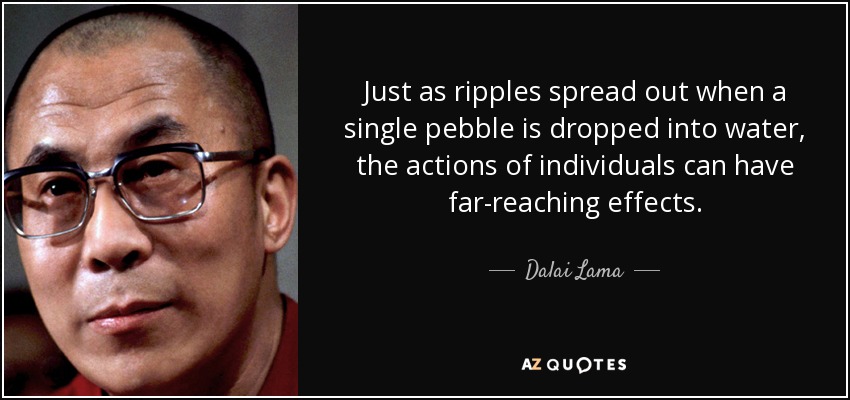
Too much death. Too much sorrow. Too much violence. Too much react rather than act. Too many grieving parents, siblings, teachers, friends (young and old), and today, a spouse who loved too much and alone was too much.
In healthcare we too are affected - too often, too much. So sad, so unnecessary, such a load for the innocent to carry, and for innocence to be lost.
No one dies alone - no one grieves alone; we are so interconnected through genetics, logistics, demographics, journeys, communities, cultures. Can't help but be affected.
This is my mom, Alice. She was also my neighbor for 15 years, my confidante, and she's the first person I shared my first tattoo with (breast cancer radiation points). This picture was taken in February at the care facility she is living at; she has dementia, and although all of her children have cared for her for the past 6 years, she needed more help than we could provide.
This mom, who was all business and little play, service before self, communicate with food, companionship, and listening intently, seldom giving advice, now seldom speaks. These days, she spends her time either sleeping on the couch in front of a movie, sleeping in her bedroom, or waking long enough to know, and gratefully recognize, her visitors.
Mom was a firm believer in acceptance, simplicity, talk-it-out, make it work, and there was an open invitation to anyone, anyone, to join her in the kitchen.
Mom wasn't a hugger or physically demonstrative, and I do not remember her ever saying "I love you," rather, a phone call or visit ended with "Love you." But these past 2 years, she has reached out to hold a hand, give a gentle pat on the back, and is more than willing to have someone hold her.
Mom was always good for a half a dozen hot cookies, a plate of cinnamon rolls, and she was more than willing to share her garden produce or help someone "bottle" the peaches from her amazing peach tree.
Mom's been a phone call or knock on the door away, and I miss her as my neighbor; yet watching her diminish in her abilities, and be baffled by her own inabilities and confusion has been so disheartening.
Mom loved her phone, and her phone calls to and from family took precedence over everything else - including a warm meal! And these days, she doesn't answer her phone, can't send a text, can't leave a voice message to "call me as soon as you can." Yet the texts and voice messages keep going to her, and it's a pleasure to watch her light up as she hears a familiar voice, sees pictures we send her, and nods as we read her the messages she receives.
She's diminished in size and capacity, yet her example, her words, are constantly with me; including, "When are you coming over again? It's been so long since I've seen you."
Happy Mother's day to my mom, to her lessons, to her frailty, to her willingness to serve, and in turn, now, her willingness to be served.
This is a great article, in some ways redundant, yet it does bring to light a few points that needed to be objectively looked at.
It brings to light five reasons faith is being deconstructed by so many people, particularly the "young."
1. Trust in large institutions is declining.
2. We live in a more diverse and mobile world.
3. High-performing Christians are simply burning out.
4. Conformity over unity.
5. Political Idolatry and Conspiracy Theories.
Perhaps the most important element of this article was this:
Deconstruction without reconstruction is a tragedy.
I often tell my clients, if you take something away (thought, action, item), you must intentionally replace it with something, otherwise, that space will quickly fill up with unintentional thoughts, actions, items.
"If the path you're on isn't making you a more generous, compassionate, ho9peful, and merciful person, then the destination isn't worth the journey."
I was invited to speak at this morning's Utah Valley Interfaith Easter Sunrise Service at the Provo Community Church. Steven Kapp Perry was the Host; with Wayne Parker of Provo City and Topher Melhoff from Orem Community CofChrist also speaking. Brittney Stradling sang, along with the stunning Utah Valley Interfaith Choir, conducted by David Lewis.
Psalm 23, specifically verse 6: "Surely, goodness and mercy shall follows me all the days of my life; and I will dwell in the house of the Lord forever," was my topic.
Several years ago I opened a Church magazine, to find this photo on the inside, front page. It spoke to me, and I have saved this page since it was published in April 2015. When I was given this verse to focus on, the first thought that came to my mind was this image. It guided my writing, and honestly, has guided my search for the Good Shepherd.
I so wanted to share this image along with my words. However, all I could find was this was a photo taken by Jim Jeffery in 2010. After quite the internet search, I was left without much more detail.
David,
a shepherd boy and later, the Shepherd King of Israel, in Psalm 23, declared,
“The Lord is my shepherd; I shall not want.” With the last verse of this Psalm
proclaiming, “Surely, goodness and mercy shall follow me all the days of my
life; and I will dwell in the house of the Lord forever.”
“Surely”
– in full confidence, David affirms that the Good Shepherd’s goodness is always
available.“Goodness and mercy” –
Goodness provides; mercy forgives or pardons. Goodness helps; mercy takes us
the rest of the way to healing. And with David fully invested in shepherding –
as well as being a sheep, he had full confidence in his shepherd. David knew
that Goodness – or God, or Shepherd, or the hands of kindness and mercy, never
faileth.
For
most of us, some of our days will be filled with grief, uncertainty, loss; yet
God’s goodness will chase after us – a goodness that never faileth.
There is so much
goodness in the world – so many many good kind people who work silently,
without need for glory or even a thank you, who, regardless of pay or business;
they are the good shepherds chasing after each of us.
Christian
author, Max Lucado, wrote, ““Goodness and mercy. Not goodness alone, for we are
sinners in need of mercy. Not mercy alone, for we are fragile, in need of
goodness. We need them both.”
As a Palliative Care
Chaplain, working at Utah Valley Hospital, I have seen Goodness, or Godness,
repeatedly these past two years. Irish poet and philosopher, John O’Donohue, in
his blessing, “For a Nurse,” wrote: "In this fragile frontier-place,
your kindness becomes the light that consoles the broken-hearted..." I
would like to share a few bits of light, these kindnesses, this Good Shepherd
Goodness:
An ICU CoVid physician worked
tirelessly to save a man, a father of 4, a stalwart in his community. His children,
angry that he would not wake up, criticized the doctor – publicly, and complained
about her to her colleagues. And yet, every single day she walked into his
room, paused at his bedside, gently took his vitals, reviewed his notes, and
more than once, with tears in her eyes, walked out of his room, gently shaking
her head. And then she moved on to the next room, with the same love and
respect.
Another ICU CoVid team – caring for a
husband and wife, both with CoVid; and their daughters watching, and waiting.
Their father died, and within weeks, so did their mother, and a husband, and a
father-in-law. After day in and day out care, aware of failing health,
caregivers gently washed worn bodies, hugged exhausted daughters, and at each death,
grieved.
A young father of 3, hospitalized for
more than 2 months, intubated, in a medically induced coma, is slowly awaken
and then gently extubated and weaned off oxygen. And caregivers, with mile-wide
smiles, applauded as this man, still with a long road ahead, was wheeled out of
the hospital into the waiting arms of his wife and children.
Doing things from Goodness, not
for Goodness.
A respiratory therapist, who cares for
patients intubated and trach’d, many who are not alert, all unable to speak,
chats with them as if they’re neighbors, speaks to them of everyday things, acknowledging
lives outside of the hospital.
An aid bathing a patient in a coma, chats
away in Spanish to this young woman from Mexico, who did not speak English.
A caregiver sang hymns with an elderly
woman, sick with CoVid and clouded with dementia.
A chaplain, who asks, “What brings you
joy?” to a man who longed for one more normal day. “Time with family,” was his
reply. And that chaplain gently lead family in, one by one, to say good-bye to
man who was the rock in their lives.
The
Shepherd is with His sheep in times of sunshine and rain, he shares his
goodness ALL the days of our lives.
An infectious disease nurse shared
that his friends and fellow caregivers were his Goodness. Their simple acts –
bottles of water, cups of coffee, short walks, were the encouragement he needed
to make it through dark days when the line of patients needing treatment never
shortened.
A daughter of an elderly man who had
recently passed away distributed bright orange roses to the hospital staff on
his floor, thanking them for being a bit of sunshine in his life.
“I was saved by
the beauty of the world,” said Poet, Mary Oliver.
Two caregivers and a hospital gift shop manager arranged an
anniversary gift for a husband to give his wife, whose days were numbered, paid
for by the volunteers in the gift shop.
A provider, after hearing that a
patient she had served over his multiple hospitalizations had passed, left the
hospital, looking for a private place to grieve. And a physician, seeing this,
wrapped his arms around her.
Believers – The Shepherd’s crook is there for us to grab onto,
and we are rescued.
A former patient shared, “Out of a dozen caregivers, they were all
kind, patient, kept me alive, and though I don’t remember much, I always felt
safe, and my family watched and trusted and learned to love my caregivers as
they cared for me.”
A flower, left anonymously at the front
door of this chaplain’s home, saying, “Well done.”
A young friend, after being on and off
bed-rest for nearly two years, honored her primary caregiver, “My mom! She has
been the biggest blessing in my life. She bought me food I could eat, drove me
to doctor’s appts, held my hand while blood was drawn, carried me down the
stairs when I was too weak to walk, and laid down next to me and held me while
I cried, letting me know she was by my side. She has been my goodness, my love,
my shepherd.”
We are the sheep, and we are the tender shepherds. And today,
we can take those lessons learned from these experiences and do our best to be
the Shepherds He would want us to be. We can be His rod and His staff.
We all have days of dark, days of
despair, days of sorrow and weariness and loneliness and loss. As I have
listened to, and first-hand observed, the generosity of others, I am confident
that the Good Shepherd’s presence in our lives is made manifest by kind
gestures, tender actions, calm presence. If Goodness never faileth, then we, as
imperfect and complicated people, are that good. We should be kind; and
practice being kinder. Without motivation. Surely, goodness and mercy
WILL follow us, as we are His hands, eyes, voice. There is hope, Goodness never
faileth, all the days of our lives; He is our Sunrise.
At that very hour some Pharisees came and said to
[Jesus], “Get away from here, for Herod wants to kill you.”He said to them, “Go and
tell that fox for me, ‘Listen, I am casting out demons and performing cures
today and tomorrow, and on the third day I finish my work.’ . . . Jerusalem,
Jerusalem, the city that kills the prophets and stones those who are sent to
it! How often have I desired to gather your children together as a hen
gathers her brood under her wings, and you were not willing!”—Luke 13:31–32, 34
Nadia
Bolz-Weber is a Lutheran pastor, author, and dear friend of Father Richard’s.
She published this sermon during the first COVID shutdown in the United
States. She describes how Christians might interpret the oft-given scriptural
command to “Be not afraid.”
Never once have I stopped being
afraid just because someone said that.
I AM afraid. . . .
So maybe our hope for becoming
unafraid is found in . . . the part where Jesus calls Herod a fox and then
refers to himself as a mother hen.
A mother hen.
Maybe that beautiful image of God
could mean something important for us: and by us I mean we fragile,
vulnerable human beings who face very real danger. I can’t bear to say that
this scripture is a description of what behaviors and attitudes you could
imitate if you want to be a good, not-afraid person. But neither can I tell
you that the Mother Hen thing means that God will protect you from Herod or
that God is going to keep bad things from happening to you.
Because honestly, nothing actually
keeps danger from being dangerous.
A mother hen cannot actually keep a
determined fox from killing her chicks.So where does that leave us? I mean, if danger is real,
and a hen can’t actually
keep their chicks out of danger, then what good is this image of God as
Mother Hen if faith in her can’t make us safe?
Well, today I started to think that
maybe it’s notsafety that keeps us from being afraid.
Maybe it’slove.
Which means that a Mother Hen of a
God doesn’t keep foxes from being dangerous . . . a Mother Hen of a God keeps
foxes from being what determines how we experience the unbelievably beautiful
gift of being alive.
God the Mother Hen gathers all of
her downy feathered, vulnerable little ones under God’s protective wings so
that we know where we belong, because it is there that we find warmth and
shelter.
But Faith in God does not bring you
safety.
The fox still exists.
Danger still exists.
And by that I mean, danger is not
optional, but fear is.
Because maybe the opposite of fear isn’t bravery.Maybe the opposite of fear is love.
So in the response to our own Herods, in response to the very real dangers of
this world we have an invitation as people of faith: which is to respond by
loving.
This last week I had a friend call to see if he could see me at the chapel of the hospital. I told him my office was elsewhere, and we could meet there.
I let him into my office, invited him to sit. As we began our conversation the doctor I work with walked by, joined in for a moment, then left. My friend looked at me and said, "I don't think I know what it is you really do." And, "Is this a paid job or are you a volunteer? How many hours are you here?"
I began to explain that yes, this is a career, not a volunteer job, that I do get paid, that I've had more than 2000 hours of generalized and specialized training, and just as someone would most likely not allow someone who likes blood to draw their blood, rather waiting for a professional, it is the same with chaplaincy. Just because someone likes religion or spirituality, does not make them trained to spend time with patients who have so many needs in time of crisis.
My friend and I have folklore in common, and he wondered how I had transitioned from teaching folklore and writing at UVU to being a fulltime chaplain. So I shared with him my passions - listening to others talk about their beliefs, their rituals, their traditions, and being a companion to others along this path we call life. And as a chaplain I get that opportunity.
First - why on earth are there chaplains in the medical field? I thought they were only for the military.
The best answer I've read in quite some time comes from:
Hospital chaplains provide non judgmental spiritual and emotional support for people facing some of the most difficult times in their lives. We are committed to caring for people of all walks, faiths and backgrounds with love and compassion. We are a key part of the whole person care.
And then I had to answer to what was my education like. And I replied, Clinical Pastoral Education, often referred to as CPE, a 40 hour a week program with course work and on-the-ground internship. Along with more training for my specialization in Palliative Care (another time).
This past month I've spent a significant amount of time working on a document that not only shows what a chaplain's role is, but also the similarities and differences between the roles of a chaplain and a social worker.
And I'll end today's post with that document and the differentiation in just a few words:
A social worker provides resources, a chaplain provides relationships. Oversimplified, and as you can see below, we both do both.
Social Worker
Shared Collaboration
Chaplain
Professional Clinical Counselor (Licensed)
While providing similar services, pastoral counselors integrate
spirituality, faith, and theology with psychotherapy to help patients and
families (pastoralcounseling.org)
Professional Pastoral Counselor (Certified)
Conduct a psychosocial assessment
Conduct a spiritual assessment, as well as assessing spiritual and
existential ethical/moral questions which have an impact on end-of-life
decisions or treatment options (where do they draw strength, hope; as well as
religious practices)
Coordinate with psychiatric staff as needed
Identify emotional concerns: grief/loss, fear, sadness/depression,
nervousness/anxiety, anger, guilt/shame, hopelessness, loss of interest;
Consult in Interdisciplinary Team for appropriate referral as needed.
Coordinate with members of the team in aligning patient’s values with
care plan
Substance use evaluations and interventions
Identify problems associated with substance use, mental health
issues, and behavioral issues and coordinate with SW who will find
appropriate resources for patient and family
Provide interventions for spiritual and emotional distress and pain:
loss of faith, feeling alone, loss of direction, lack of peace, despair,
searching for meaning, etc.
Refer to Neuropsych for capacity determination
Refer to SW for substance abuse, mental health, and behavioral issues
Complete comprehensive assessment with patient and caregivers, refer
to resources based on assessment, screening patients for transition planning
and psychosocial needs
Identify psycho-spiritual variables that contribute to patient’s care;
that is patient-centered and family-focused, that respects diversity in all
its dimensions/demographics
Identify patient’s values, i.e. relationships, meaning, making, sense
of peace and needs in these areas
Provide brief therapy interventions for patients and families that
may include support in treatment decisions
Emotionally support patients and families during times of difficulty
including grief, loss, burnout, secondary trauma, compassion fatigue, etc.
Provide spiritual care including deeply listening to all languages –
body/verbal/emotional, supportive dialogue, pastoral counsel, and supportive
presence
Advocate and refer to community resources to include social
determinants including housing, finances, mental needs, substance use,
safety, medical follow up, dental, health literacy, and transportation, as
well as APS, DCFS, and Guardianship Services
Advocate for quality of spiritual care across the service continuum
Liaise with local clergy for religious rituals and sacraments as well
as to provide for unmet spiritual needs of patients and families
Counsel for grief and loss as a result of demise, chronic disease, or
trauma
Counsel for grief and loss as a result of diagnosis, disease,
hospitalization, death. How will this life be celebrated and loss be grieved?
Provide bereavement support to patients and family; including:
Anticipatory grief, ambiguous grief, complicated grief
Mindfully be present and sit with patient, connect patient with self;
allow experiences to arise without needing to act on them
POLST preparation shared with clinical team members
Advanced Directive preparation
Coordinate and support Legacy work, i.e. life review, sharing
memories, reflection
Lead hospice and end of life family meetings with providers
Develop, lead, and participate in appropriate support groups,
follow-up
Provide care to team members and offer suggestions as well as
encourage team members to have practices of self-compassion and kindness.
Lead reflections that teach care for self and care for others. Educate team
on multiplicity of spiritual care practices. Advocate for spiritual care
practices in the system.
Provide education about spiritual care to caregivers. Participate
in/facilitate patient care conferences, meetings.
Demonstrate, and then provide appropriate coping and relaxation
techniques to alleviate stress and situational anxiety
Engage in narrative approaches to finding meaning, identifying fears,
hopes, conflicts/coping. Share memories and reflect on legacy. Assist family
in ways of preserving these memories.
Document all visits and interactions in a timely fashion using
documentation in iCentra, as well as role specific (FICA, HOPE, SIP, SOAP);
use secure messaging forums for inter-team communication